Citizen Science in Educational Institutions in Uros: Future guardians of the lake
In Peru, the Lake Titicaca ecosystem directly supports various local communities. In this context, the educational institutions (E.I.) located in the Uros Floating Islands Community (Puno Province)—Uros Chulluni Secondary School, Uros Torani Pata Elementary School, and Uros Tribuna Elementary School—hosted an initiative focused on citizen science and environmental education. The activity brought together an estimated 80 participants, including elementary and secondary school students along with their teachers, with the goal of empowering them through practical tools and technical knowledge regarding the observation of aquatic biodiversity and environmental restoration.
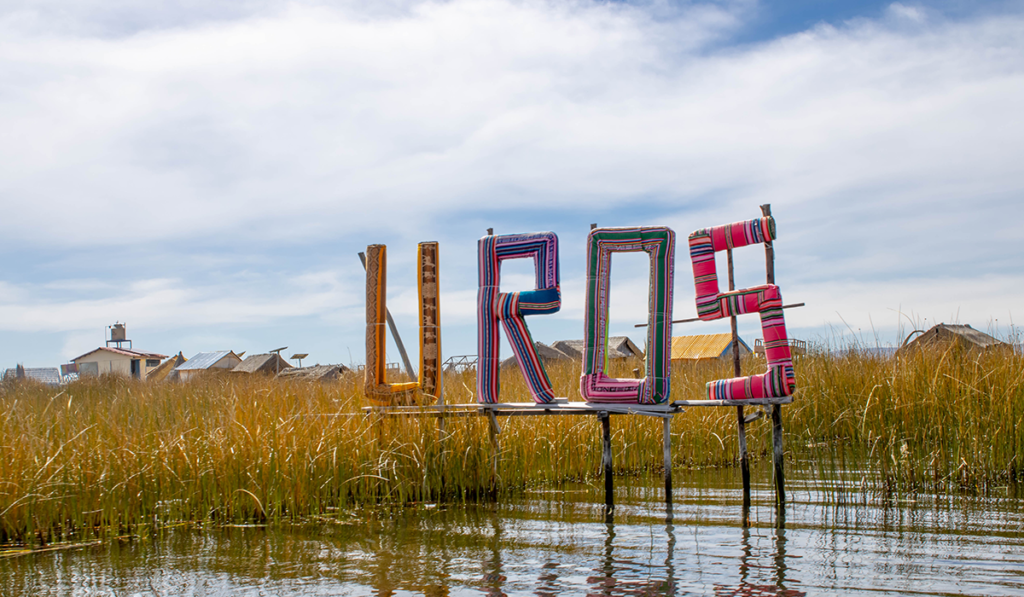
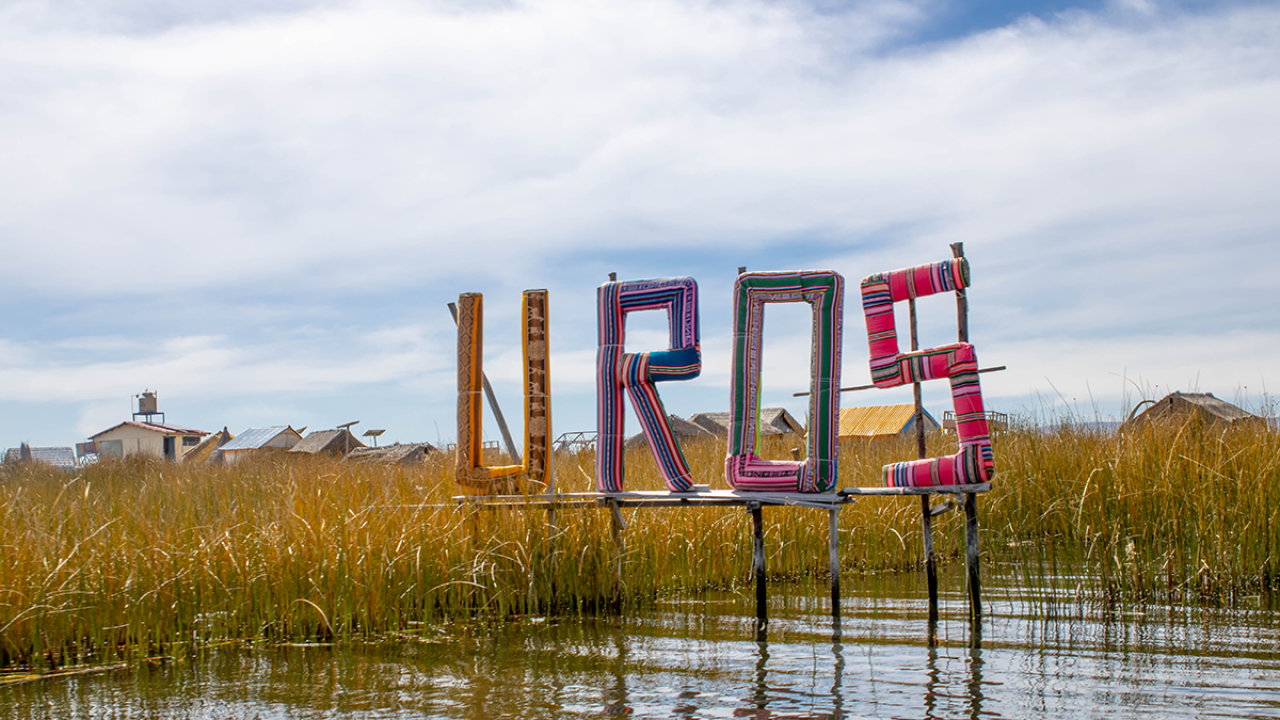
Sign for Uros, on the way to the floating islands on Lake Titicaca. (Photo: June 26, 2026)
What is the problem?
Lake Titicaca currently faces various environmental challenges associated primarily with wastewater pollution, the accumulation of solid waste, and eutrophication processes. These pressures have led to a progressive deterioration in water quality, affecting aquatic biodiversity and the ecosystem services that sustain local communities. Given this situation, there is a need to strengthen citizen science strategies that actively involve communities around the lake in observing, understanding, and monitoring their own ecosystem. The initiative addressed the importance of bringing scientific knowledge to the educational community, promoting not only the acquisition of environmental concepts but also the development of practical skills to recognize indicators of the lake’s condition and participate in generating useful information for its conservation.
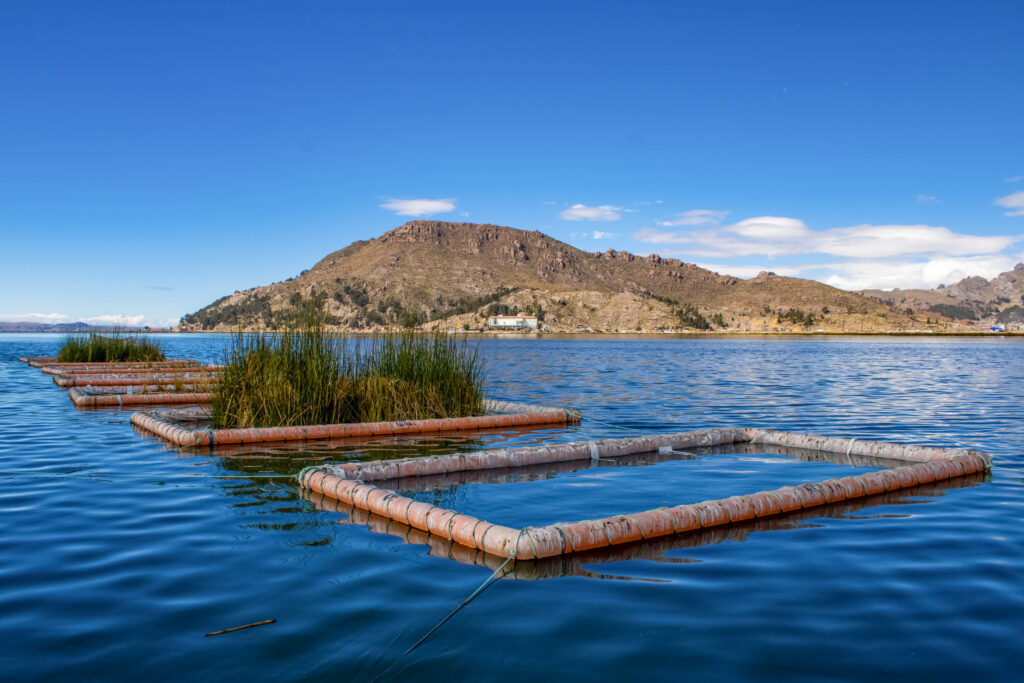
Pilot Project for Floating Green Filters (FVF) located near the Espinar Wastewater Treatment Plant in the city of Puno on Lake Titicaca. (Photo: July 2, 2026)
How was it carried out?
The strategy was developed using a participatory approach based on the principles of citizen science, promoting interaction between scientific knowledge, environmental education, and local knowledge. To this end, the content was organized into three main thematic areas addressed with both educational groups: a) The conservation of native fish species in Lake Titicaca, highlighting the importance of protecting aquatic biodiversity and promoting sustainable practices; b) Analysis of water quality and the effects of pollution, fostering an understanding of key environmental indicators and their impacts on the ecosystem; and c) The use of totora reeds as a floating green filter, as an environmental remediation alternative based on natural solutions for restoring water quality. To ensure meaningful learning tailored to each group, the methodology was adapted according to educational level.
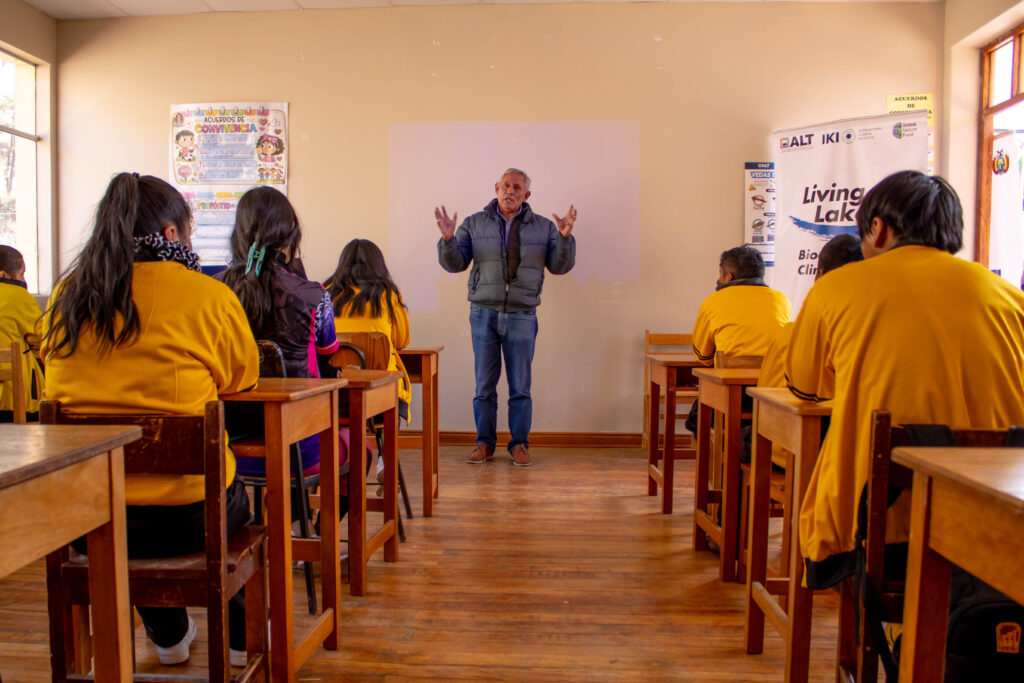
Juan Ocola, Esq., president of the ALT, delivering his presentation at the theoretical workshop on Citizen Science for students at Uros Chulluni Secondary School (Photo: June 26, 2026)
With high school students, an expository-participatory methodology was used focused on critical analysis and scientific reflection. Through this strategy, the students explored concepts related to ecological indicators, the socio-environmental effects of eutrophication, and the importance of conservation measures such as fishing moratoriums and minimum catch sizes. In contrast, for elementary school students, a guided discovery methodology was designed using visual resources, participatory activities, and examples related to the daily life of the Uros communities. Through these activities, students identified the main sources of lake pollution and understood the important role of aquatic plants—especially the totora reed—in the ecosystem’s natural filtration and recovery processes.
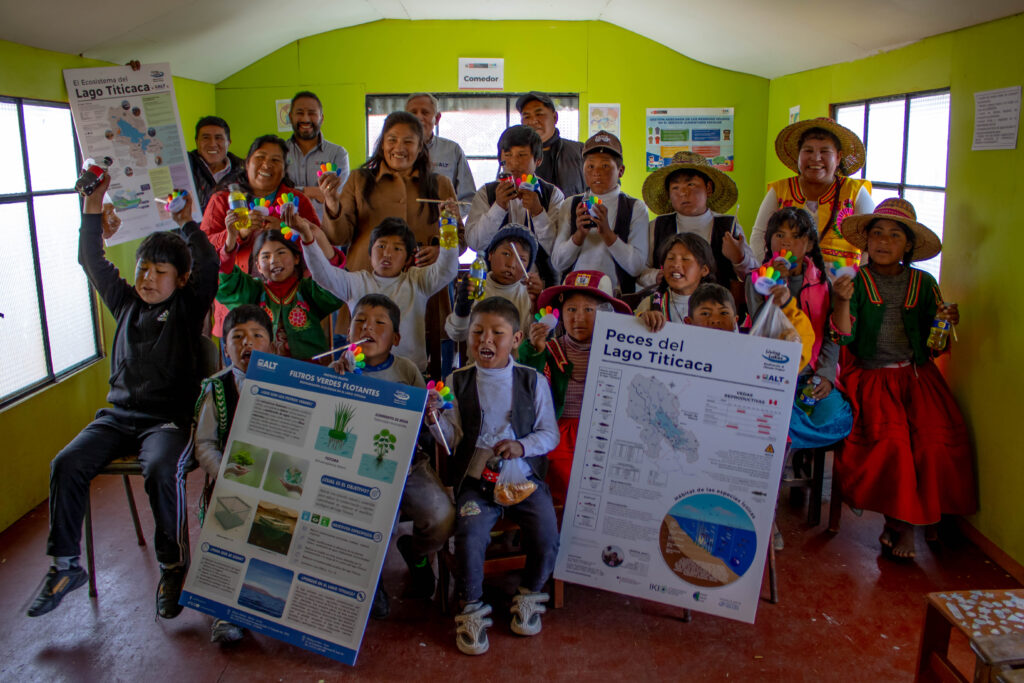
Teachers and students at the Uros Torani Pata Elementary School receive educational materials from the Living Lakes team and community representatives, strengthening the development of local environmental education. (Photo: June 26, 2026).
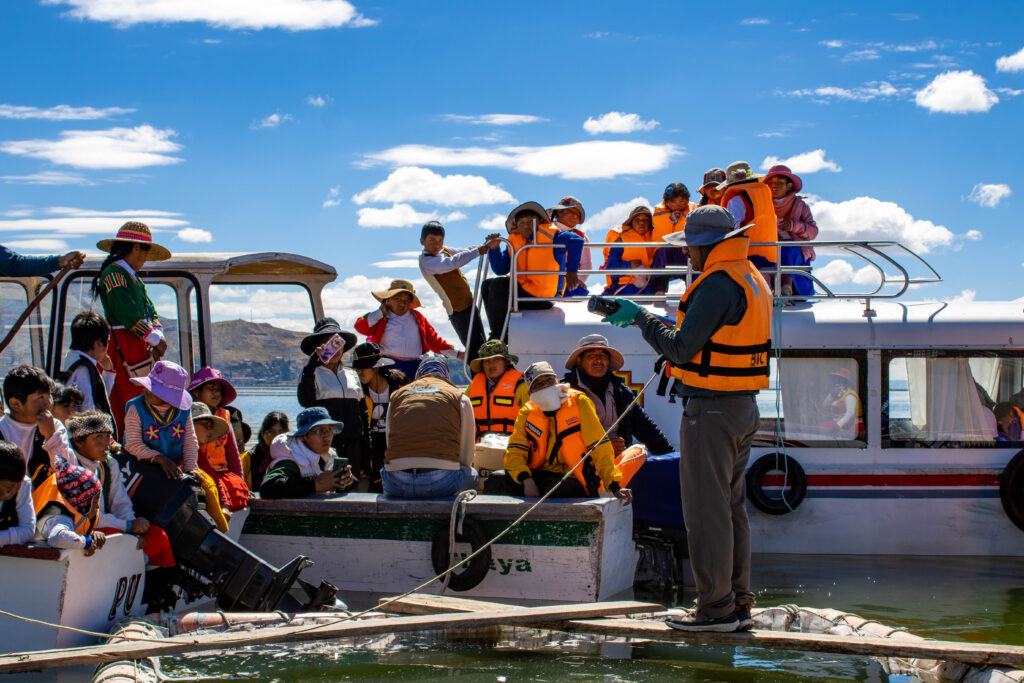
As a strategy to reinforce their learning, the students participated in an educational visit to the Living Lakes project’s Frontrunner initiative, where they learned about the experimental Floating Green Filters (FVF) mesocosms located in Puno’s Inner Bay. During this hands-on experience, the students directly observed how this nature-based phytoremediation technology works and had the opportunity to interact with specialists in biology and chemistry, who explained the processes for monitoring and evaluating the efficiency of these natural systems.
They also had the chance to learn about and handle specialized equipment for measuring water quality parameters, gaining a technical understanding of how the roots of native aquatic plants (Totora—Schoenoplectus californicus) contribute to the recovery of aquatic ecosystems through natural absorption and filtration processes.
This experience helped strengthen the connection between science, the local area, and the community, highlighting that the totora is not only a species native to Lake Titicaca but also a fundamental element of the Uros community’s cultural identity and a natural resource with great potential for environmental conservation.
A specialist from the National Water Authority (ANA) explains to students and teachers at the Uros Secondary School how biological monitoring is conducted for the Floating Green Filters (FVF) Pilot Project Chulluni, Uros Torani Pata Elementary School, and Uros Tribuna Elementary School during the field visit (Photo: July 2, 2026)
What are the main lessons learned?
During the workshops and field trip, participants took on an active role as observers and contributors to the understanding of their own ecosystem. They gained an understanding of key scientific variables, such as the lake’s altitudinal characteristics, the processes associated with eutrophication, how floating green filters work, and the importance of environmental monitoring as a tool for making informed decisions.
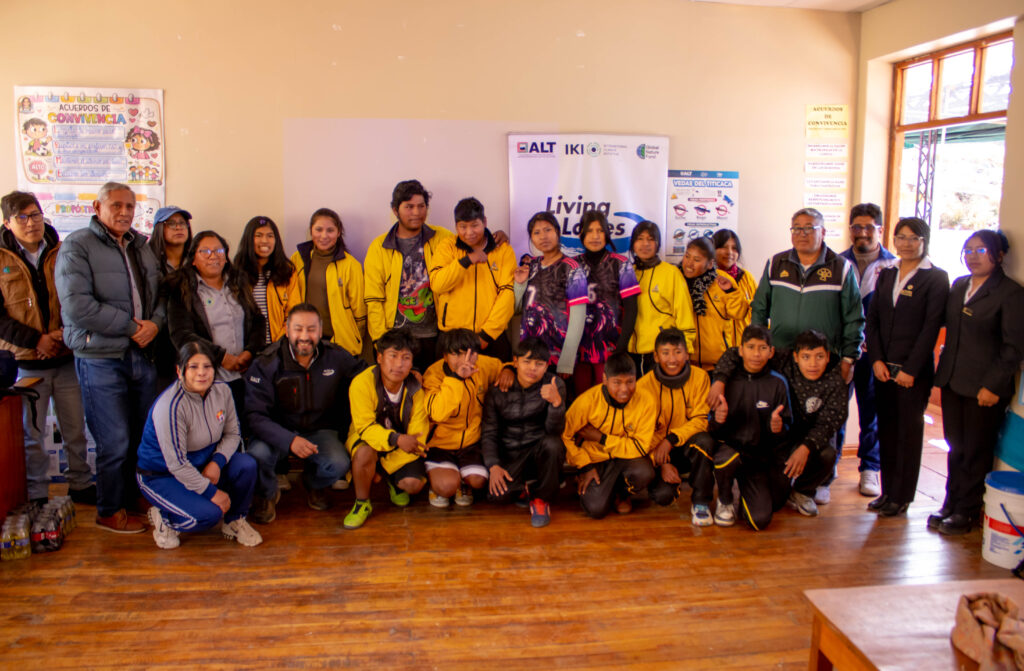
Living Lakes - ALT technical team with students and teachers from Uros Chulluni Secondary School after the theoretical workshop on Citizen Science (Photo: June 26, 2026)
The impact of the experience was evident in the educational community’s rapid embrace of the citizen science approach, as they came to understand that the generation of environmental knowledge is not the exclusive domain of specialists, but can also be built through the participation of students and teachers in their own community. One of the teachers expressed the faculty’s concern about the lake’s degradation and recalled the experience of a school project called “Guardians of the Lake,” highlighting the importance of strengthening and expanding such initiatives to maintain active student participation in environmental monitoring and management.
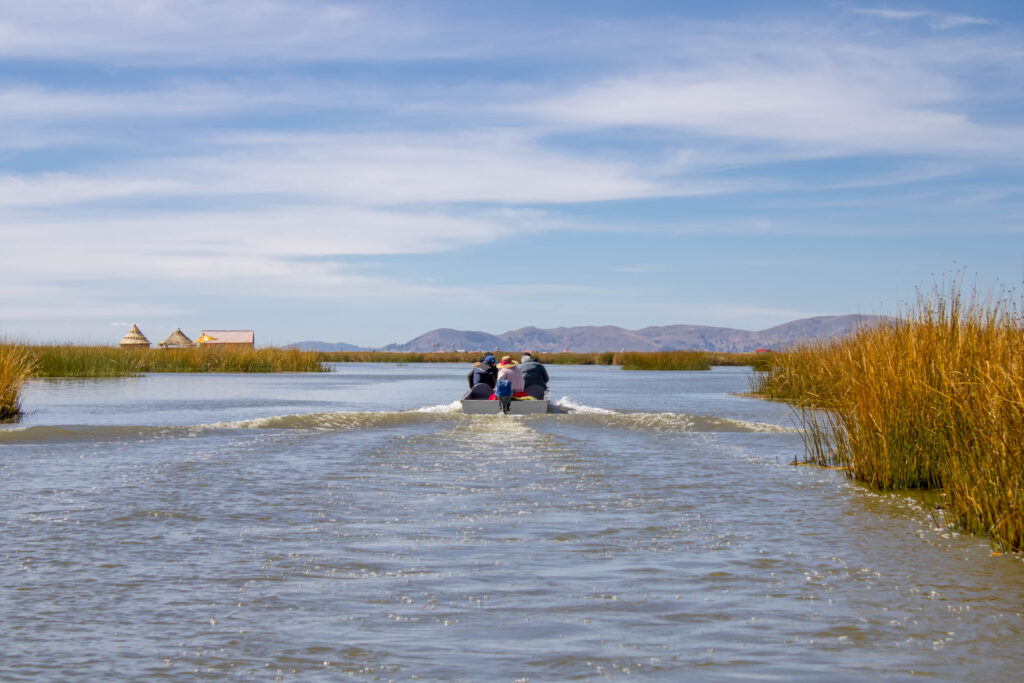
Living Lakes - ALT team on their way to schools on the Uros Floating Islands on Lake Titicaca. (Photo: June 26, 2026)
The integration of citizen science into schools in the Uros community represents a significant step toward the sustainability of Lake Titicaca, strengthening local capacities to observe, understand, and protect the ecosystem. By bringing scientific knowledge and environmental monitoring tools to the educational community, students and teachers are empowered to become informed actors capable of contributing solutions based on their own reality. The long-term commitment is to train new generations of change agents who will contribute to climate resilience and the conservation of Lake Titicaca’s hydrobiological resources.
This initiative is part of the Living Lakes Biodiversity and Climate Project, which promotes innovative solutions and knowledge exchange to protect lakes and wetlands worldwide, funded by BMUKN through IKI and supported by German Postcode Lottery, Kärcher, Lonza, Ground Lake, Georg Fischer Foundation, and many individual donors.
Join the global community for lakes
Sign up to receive our newsletter!
Thank you! Please check your inbox to complete your subscription
You are not suscribed yet - please check the confirmation email we just sent you. Thank you!
THIS WEBSITE USES COOKIES. We use cookies to store non-personal information necessary for the operation of the website. If you continue browsing the site, you accept the use of cookies on this website.