
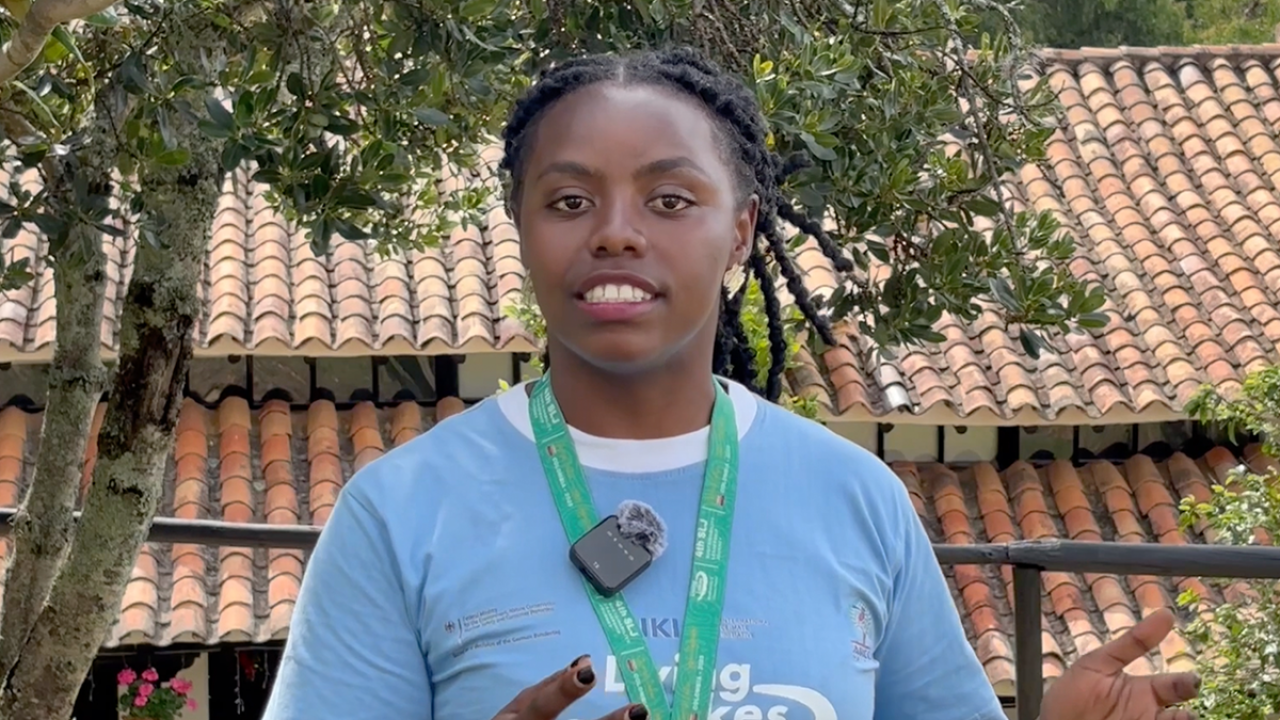
Soil erosion has long affected ecosystems and livelihoods around Lake Kivu. Through the work of the Albertine Rift Conservation Society (ARCOS Network), communities are now applying integrated, nature-based solutions to restore degraded landscapes and strengthen resilience across the basin.
In this testimony, Aline Françoise Mbabazi highlights how a combination of restoration measures is delivering tangible results on the ground.
Integrated landscape restoration
Key actions include:
- Soil and water conservation measures, such as radical terracing to reduce erosion on steep slopes
- Sustainable agriculture improvements, including gravity-fed irrigation and agroforestry systems that enhance soil stability and productivity
- Reduced pressure on forests, through the distribution of improved cooking stoves to 350 households
- Support to local value chains, including fish drying facilities to reduce post-harvest losses
- Large-scale ecosystem recovery, with 600 hectares of degraded land under restoration in the Lake Kivu basin
Linking ecosystems and livelihoods
These combined interventions show how landscape restoration goes beyond environmental recovery. By reducing erosion at its source and restoring vegetation cover, the initiatives are helping improve soil health, protect water resources, and enhance food security and income opportunities for local communities.
A nature-based solution in practice
The Lake Kivu experience highlights the value of community-led, nature-based solutions to address interconnected challenges such as land degradation, climate vulnerability, and livelihood insecurity.
At a time when freshwater ecosystems are under increasing pressure globally, this approach demonstrates how restoring landscapes can also strengthen resilience for both people and nature.
This initiative is part of the Living Lakes Biodiversity and Climate Project, which promotes innovative solutions and knowledge exchange to protect lakes and wetlands worldwide, funded by BMUKN through IKI and supported by German Postcode Lottery, Kärcher, Lonza, Ground Lake, Georg Fischer Foundation, and many individual donors.