
Lake Titicaca, one of the most iconic transboundary lakes in South America shared by Peru and Bolivia, is facing mounting environmental pressures that threaten its ecological balance and the livelihoods of surrounding communities.
At the Autoridad Binacional del Lago Titicaca (ALT), experts are working to address these urgent challenges through coordinated action and innovative restoration approaches.
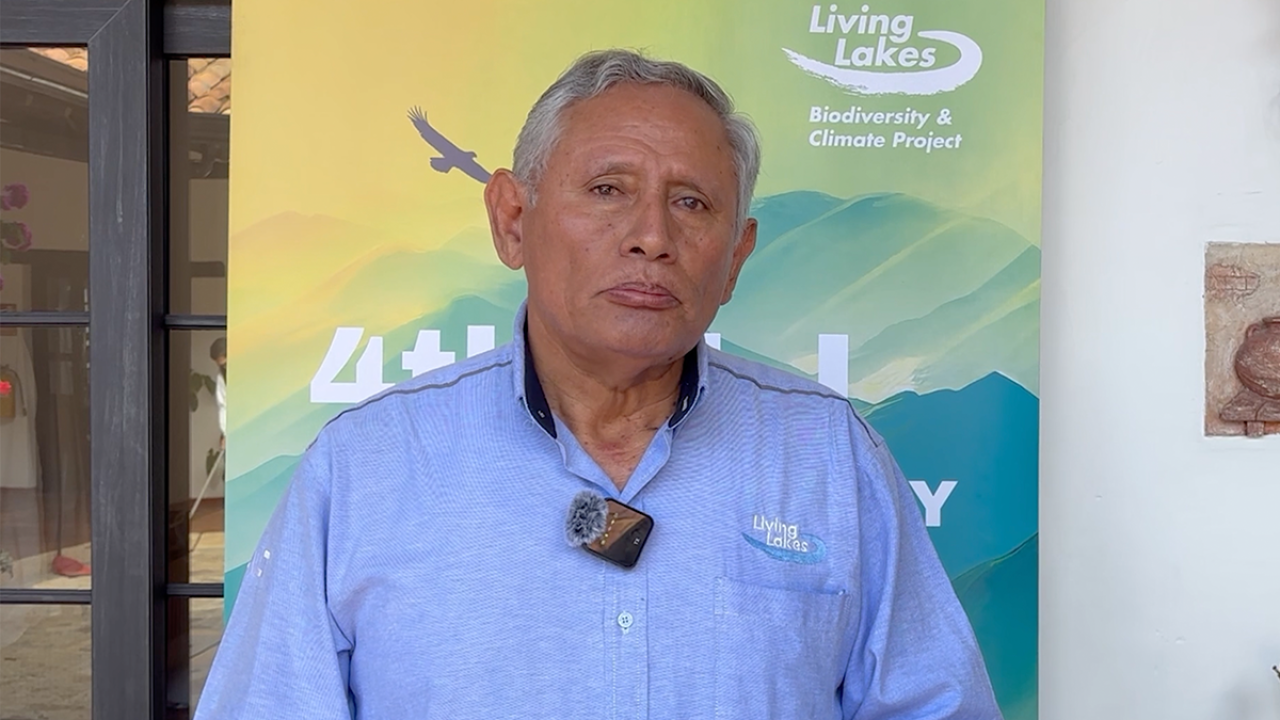
In a recent video, Juan Ocola Salazar highlights two of the most pressing issues affecting the lake: pollution and the drastic decline of fish populations.
Growing environmental pressures
Lake Titicaca is increasingly affected by multiple sources of pollution across its entire basin. These include untreated municipal wastewater, industrial discharges, mining activities, and diffuse pollution generated by agriculture and aquaculture. Together, these pressures are degrading water quality and weakening ecosystem resilience.
At the same time, the lake’s fisheries have experienced a severe collapse. Over the past 30 years, fish catches have declined by more than 90%, largely due to overfishing. This has also contributed to the loss of more than 20 native fish species in recent decades, significantly impacting biodiversity and local food security.
Nature-based solutions for lake restoration
Despite these challenges, restoration efforts are underway through innovative, nature-based approaches promoted under the Living Lakes framework.
One of the key initiatives involves the use of constructed wetland-style “green filters” based on aquatic plants. These systems are being tested in controlled mesocosms to reduce nutrient pollution such as nitrogen and phosphorus. If successful, these scalable solutions could be applied across the wider basin and replicated in other lake systems globally.
Strengthening local capacity and fisheries recovery
The project also places strong emphasis on working directly with fishing communities in both Peru and Bolivia. Activities include awareness-raising, capacity-building, and the introduction of improved fisheries management techniques such as artificial fertilisation to support the recovery of native fish species.
By involving local stakeholders, the initiative aims not only to restore ecosystems but also to strengthen livelihoods and ensure long-term sustainability.
Towards a shared binational strategy
A key milestone in this collaborative effort is the development of a binational fisheries management plan. This framework will bring together government institutions, local communities, and technical stakeholders from both countries for the first time in a coordinated governance approach.
A shared responsibility for the future
The experience of Lake Titicaca reflects a broader global reality: lakes and wetlands are under increasing pressure worldwide, yet they remain essential for biodiversity, climate regulation, and human well-being.
Protecting these ecosystems means investing in science-based solutions, strengthening cross-border cooperation, and ensuring that local communities remain at the centre of restoration efforts.
Through initiatives like those led by ALT and the Living Lakes Network, there is growing momentum to turn the tide toward recovery and resilience.
This initiative is part of the Living Lakes Biodiversity and Climate Project, which promotes innovative solutions and knowledge exchange to protect lakes and wetlands worldwide, funded by BMUKN through IKI and supported by German Postcode Lottery, Kärcher, Lonza, Ground Lake, Georg Fischer Foundation, and many individual donors.